Venezuela, Trump, and Bitcoin: Geopolitical shock in early 2026
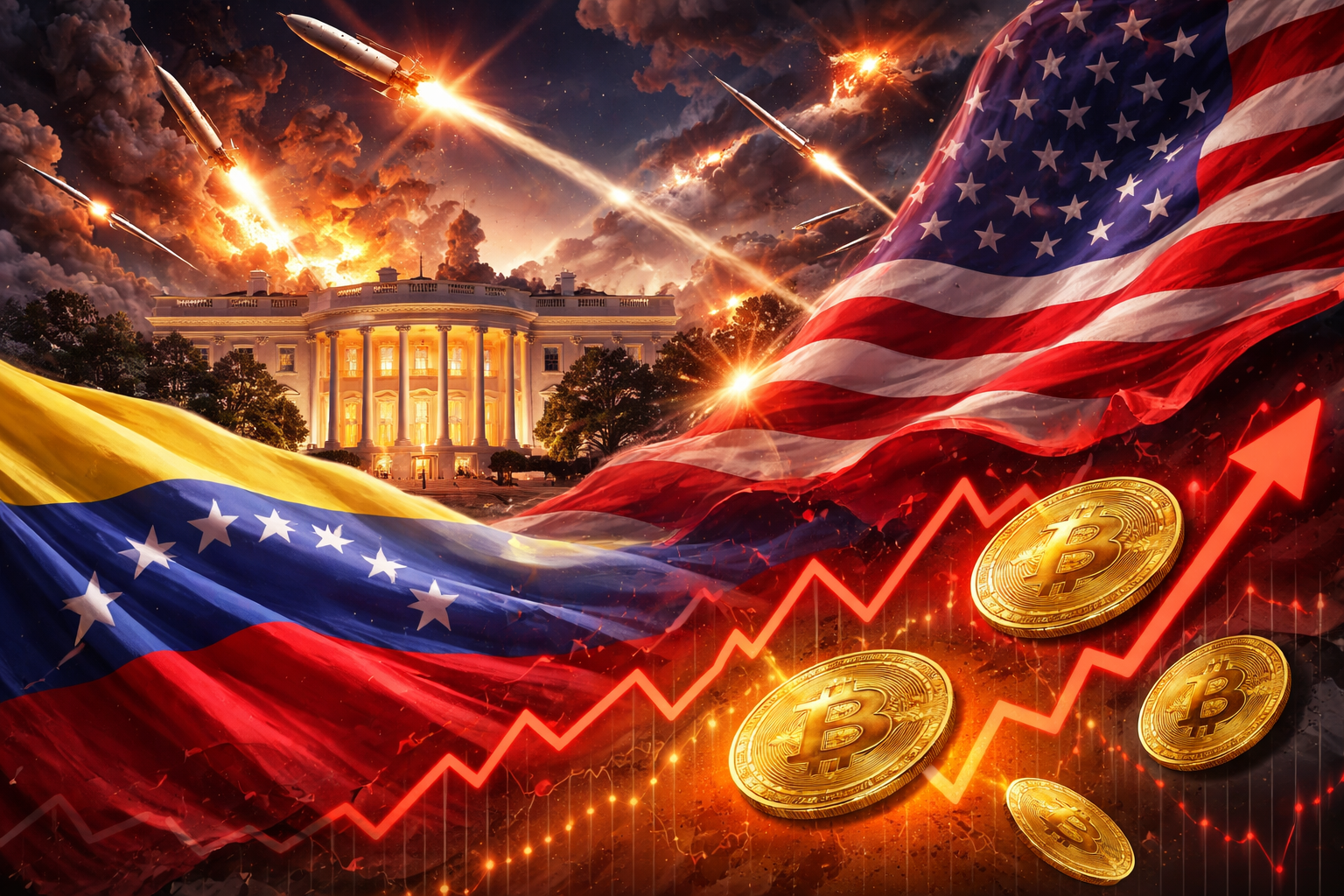
Crypto markets entered “panic mode” in the first days of 2026 after reports of military strikes on Venezuela’s capital, Caracas, ordered by U.S. President Donald Trump, spread across global media.
The reaction was swift. Bitcoin slipped below the psychological level of $90,000, and within hours the market shifted from a “calm start to the year” to a familiar sense of uncertainty and volatility.
How Bitcoin reacted to the news
Just hours after information about the strikes emerged, the price of Bitcoin dropped from levels around $91,000 to the area below $89,600.
This is not surprising. During geopolitical shocks, markets usually do the same thing:
- reduce risk
- close leveraged positions
- move into a “wait-and-see” mode
It is important to understand that in moments like these, crypto does not “die” — it simply recalibrates. The market assesses the news, measures the risk of escalation, and only then chooses a direction.
Why Venezuela matters for the crypto market
Venezuela is not just another country in conflict. In recent years, it has become one of the most active crypto markets in Latin America.
The reason is clear: when a national currency loses value and access to stable financial instruments is limited, people look for alternatives. For many Venezuelans, that alternative is cryptocurrencies, especially stablecoins such as USDT, because they offer predictability and a way to preserve savings.
When conflict erupts in such an environment, the effect is twofold:
- the local crypto economy is put at risk
- global markets react to the uncertainty
This is precisely why the news does not remain “regional.” It immediately becomes a factor influencing sentiment and the price of Bitcoin.
Political backlash and fears of escalation
In the United States, serious criticism of the administration’s actions has already emerged. Opponents point to questionable legality and the risk of the conflict escalating further.
For crypto investors, this means one thing: the market will remain highly sensitive to news.
The longer tensions persist, the more likely we are to see:
- more frequent price movements
- sharper reactions to every new statement
- greater difficulty in forming a stable trend
What this means for investors
In moments like these, the most important thing is to avoid emotional decisions.
If the market is in “panic mode,” simple rules usually apply:
- reduce risk
- avoid high leverage
- think in scenarios, not predictions
History shows that Bitcoin goes through crises, wars, and shocks — but rarely without turbulence. Long term, these are the moments that shake out weak hands; short term, they are a test of discipline.
What is happening in Venezuela is yet another reminder that the crypto market is now part of the global financial and political system. Decisions by world leaders, conflicts, and economic shocks have a direct impact on prices and market sentiment.
In the short term, we may see higher volatility and unexpected moves.
In the long term, this is yet another reminder of why crypto exists in the first place.