
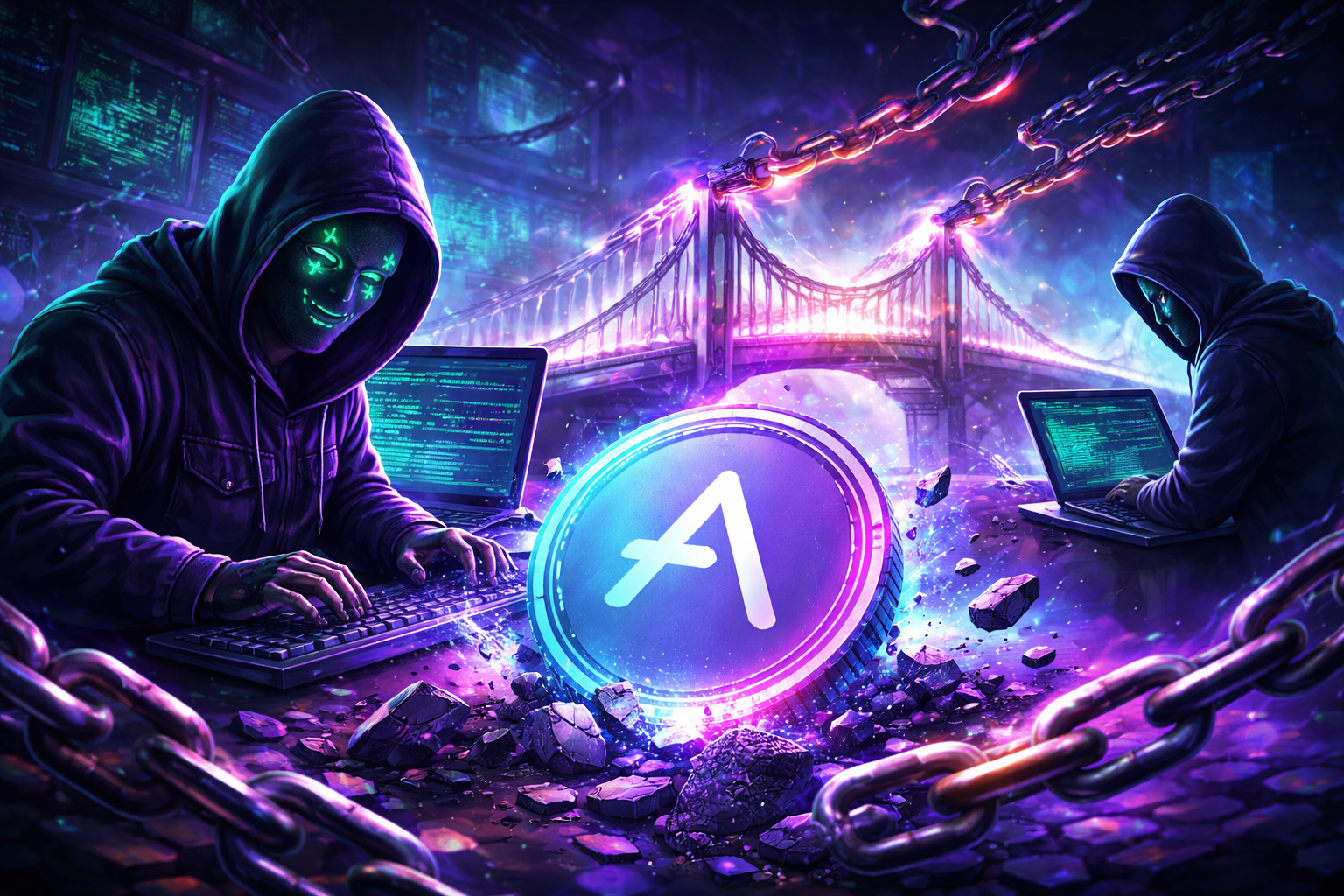
"Secure" DeFi has cracked...
Imagine this.
You leave your money in a place everyone calls “safe”.
You earn a small yield. Nothing risky. Nothing complicated.
And then one day…
- You can’t withdraw it.
That is exactly what happened with Aave.
And this time, it’s not just “another hack”.
This is a moment when many people realized something important for the first time:
In DeFi, there are no guarantees. Even when it looks like there are.
How it all starts
Let’s break it down into 3 steps:
1. A project called KelpDAO, has a token (rsETH)
2. Through a cross-chain messaging system, LayerZero, a breach occurs
3. The hacker “creates” fake rsETH with no real backing
And then comes the most important part:
- He uses this fake asset as collateral on Aave
- Against it, he borrows real money (WETH)
- And disappears
What does that mean?
Imagine someone:
- deposits fake gold in a bank
- takes real money against it
- and walks away
When the bank realizes it…
something worthless is left in the vault.
And this is where the real problem begins
Aave is now left with:
- real money that is missing
- collateral that cannot be sold
This is called “bad debt”.
- The system owes more than it actually has.
The panic...
When the news breaks:
- people start withdrawing
- liquidity dries up
- utilization reaches 100%
And then comes the shock:
- Even if you have money there… there is no one who can give it back to you
Not because it disappeared.
But because it has already been borrowed by others.
The most unexpected effect
This is where it gets even more interesting.
People realize:
“If I can’t withdraw my money… I’ll borrow against it.”
And they start to:
- borrow as much as possible
- drain every bit of new liquidity
- increase the risk even more
This deepens the crisis.
The big question: who pays?
This is the core of the problem.
The old idea was simple:
- you deposit
- you earn yield
- AAVE holders absorb the risk
But today’s reality is different.
- In many cases… the depositors themselves are first to take the hit
In other words, the people who think they are simply “holding funds”.
Why this matters so much
This case changes the game.
1. “Safe DeFi” no longer sounds so safe
Even the biggest protocols can break
2. Connections between systems are a weakness
One problem in a bridge can bring everything down
3. Yield comes with hidden risk
And sometimes you realize it… too late
What happens from here
Now everything depends on the protocol’s decisions:
- Will the losses be covered?
- Will users be harmed?
- Will the AAVE token be used as protection?
Whatever happens…
👉 This will be a lesson for the entire DeFi market
The most important thing to remember
DeFi is often sold as:
“A transparent system governed by code”
But in reality:
- When something breaks, everything comes down to human decisions
Conclusion
The case of Aave is not just another hack.
It is a moment when many people realized something important:
- that “passive yield” does not mean “risk-free”
- and that even the biggest protocols can crack
And most importantly:
that when something goes wrong… there is no one to turn to.
And this is exactly where the difference comes in.
While in DeFi everything depends on code, governance, and complex links between protocols,
there is also a simpler approach:
- using a platform that gives you clear terms, real support, and control over your funds
At Altcoins.bg, the idea is different.
We do not promise you “magic yield”.
We do not push you into complicated strategies you do not understand.
We give you:
- an easy way to buy and sell crypto
- transparency about what happens to your funds
- a real team you can rely on
Because at the end of the day…
crypto should not have to be complicated to be useful.
If you want to understand situations like this in time and make better-informed decisions, you can follow the Altcoins.bg blog - that’s where we translate complex topics into clear, understandable language.