
Types of Cryptocurrency Wallets and How to Choose One?
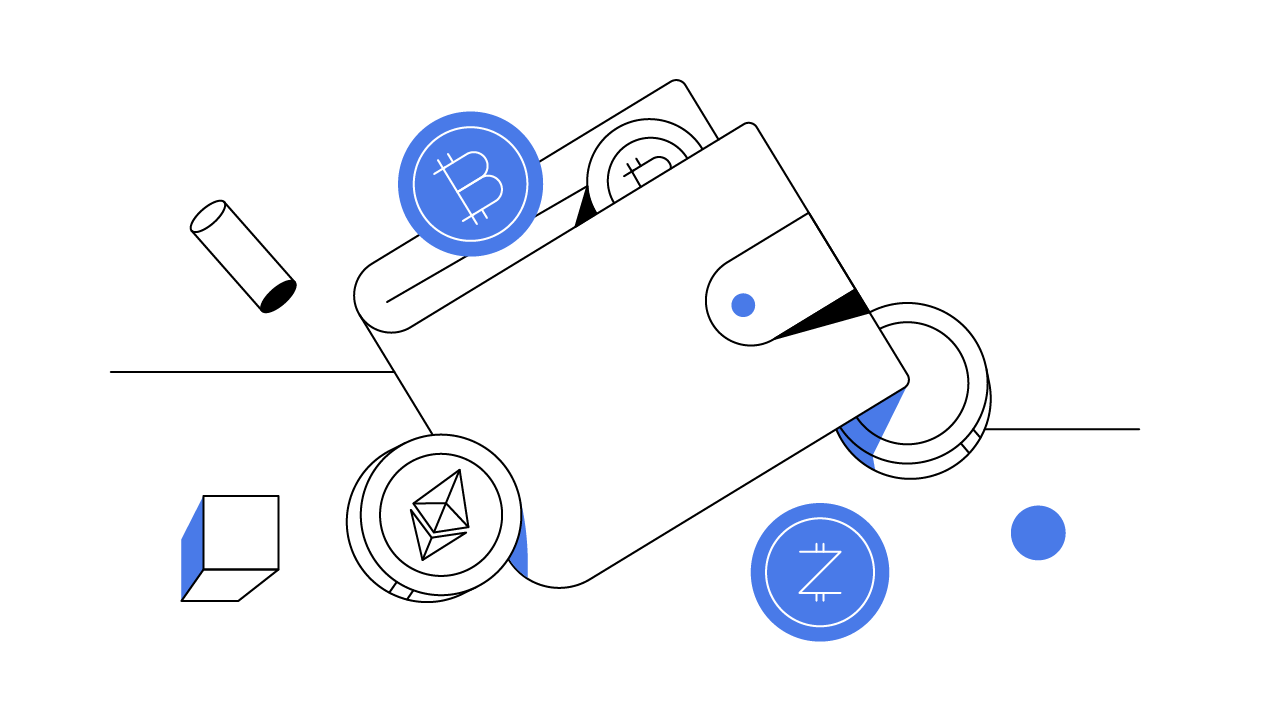
A crypto wallet does not eliminate the risks associated with holding and using crypto-assets. The choice between custodial and self-custody depends on your experience, how you use your assets and your ability to protect access to them.
Never share your seed phrase or private key.
Crypto wallet: which type is right for you?
A crypto wallet is one of the essential tools for anyone who owns crypto-assets. It allows you to receive, send and manage your assets.
The crypto-assets themselves are not physically stored “in the wallet”. They remain recorded on the relevant blockchain network, while the wallet manages the keys and access to them.
That is why the most important question when choosing a wallet is not simply whether it should be hot or cold, but who controls the keys: you or the service provider.
KEY TOPICS
What does a crypto wallet actually store?
We often say that we keep Bitcoin, Ethereum or another crypto-asset “in our wallet”. Technically, however, crypto-assets remain recorded on the blockchain network.
The wallet manages the keys, addresses and access that allow you to control your assets and sign transactions.
This is where one of the most important differences between different types of wallets comes in.
THE KEY DIFFERENCE
If you hold and control your private key or seed phrase, you are using self-custody.
If a regulated provider stores and manages access to crypto-assets on your behalf, this is a custodial service.
Both models have their own advantages and risks. What matters is knowing who controls access and what would happen if that access were lost.
Custodial or self-custody: what is the difference?
| Question | Custodial | Self-custody |
|---|---|---|
| Who controls the keys? | The provider manages the infrastructure and access on behalf of the client. | You control your private key or seed phrase. |
| Can access be recovered? | There is usually a procedure for account recovery and identity verification. | If you lose access and do not have your seed phrase or another backup, the funds may become inaccessible. |
| Convenience for buying and selling | High. The assets are directly connected to the platform and can be used for trading. | A blockchain transfer to a platform is usually required before you can sell or exchange the asset. |
| Main risk | You rely on the provider’s security, infrastructure and rules. | You are responsible for storing the keys and protecting the wallet. |
| Suitable for | People looking for convenience, easy access and the ability to receive assistance if a problem occurs. | People who understand how private keys are managed and want full control over their access. |
There is no universally correct choice. For one user, the convenience of a custodial wallet may be more important, while another may prefer the full control offered by self-custody.
Hot, cold, software and hardware wallets
These terms are often used together, but they do not mean the same thing. For example, a software wallet can be self-custody while also being a hot wallet.
Hot wallet
A hot wallet is a wallet used on a device connected to the internet. It is generally convenient for more frequent transfers and everyday use.
This convenience means that particular attention should be paid to the security of the device, passwords and applications you use.
Software wallet
A software wallet is an application for a phone or computer.
Many of these wallets are self-custody, which means the user manages their own seed phrase and has direct control over access to their assets.
Hardware wallet
A hardware wallet is a specialised physical device designed to keep private keys isolated from the normal environment of a computer or phone.
This can reduce certain risks, but it does not make the user invulnerable. If you give your seed phrase to a scammer or approve the wrong transaction, the device itself cannot protect you.
Custodial wallet
With a custodial wallet, the provider manages access to the crypto-assets on behalf of the client.
Here, it is particularly important to know who the provider is, how it is regulated, how it protects client assets and what happens if you lose access to your account.
How to choose a crypto wallet
The best wallet is not necessarily the one with the most features. What matters more is whether it fits the way you actually use your crypto-assets.
| If this is important to you... | Suitable option | What to check |
|---|---|---|
| Easy buying and selling | Custodial wallet with a reliable and regulated provider | 2FA, withdrawal protection, custody terms and customer support |
| Full control over the keys | Self-custody software or hardware wallet | Backup, seed phrase storage, device security and supported networks |
| Long-term storage | Hardware wallet or another suitable self-custody option | Secure backup, physical protection and a way to recover access |
| Frequent transfers | Hot or software wallet | Phishing protection, address verification and device security |
THERE IS NO SINGLE “BEST” WALLET
Not all crypto-assets necessarily need to be stored in the same way.
Some users prefer to keep part of their assets in a wallet they use more frequently and another part in a separate wallet for longer-term storage.
The right approach depends on how you use your crypto-assets, your experience and the level of control you want to have.
Seed phrase, private key and PIN: what is the difference?
These terms are often confused, but the differences between them are important.
Private key
A private key is the cryptographic key used to prove control over a blockchain address and sign transactions.
It should never be sent to a support representative, bank, platform or any other person.
Seed phrase / Recovery phrase
A seed phrase is a sequence of words that can be used with many self-custody wallets to recover the keys and regain access to the assets.
In practice, anyone who obtains your seed phrase may be able to gain control of your wallet.
That is why it should be protected as one of the most sensitive parts of your access to crypto-assets.
PIN / device password
A PIN or password protects access to a specific device or application.
However, it does not replace the seed phrase. If your wallet uses a recovery phrase, that phrase will usually allow you to restore access on another compatible device.
Public address
A public address is the address you use to receive crypto-assets.
It can be shared with other people. Before making a transfer, however, you should always check both the address and the selected blockchain network.
NEVER SHARE YOUR SEED PHRASE
Never enter your seed phrase on a website you reached through a random link, chat, email or message.
Do not send it to anyone claiming to be a customer support representative either.
Legitimate support can help you with your account, a transfer or a technical issue, but it does not need your seed phrase or private key.
How to avoid mistakes when making a crypto transfer
Blockchain transfers generally cannot simply be cancelled at the press of a button. That is why a few checks before sending can help you avoid a serious problem.
Check the crypto-asset
Make sure you are sending the correct crypto-asset. Assets such as USDC may be supported on more than one blockchain network.
Check the network
The network you select when sending must also be supported by the receiving address or platform.
Sending the correct crypto-asset does not automatically mean that you have selected the correct network.
Check the address
Before confirming, compare the address carefully, especially its first and last characters.
Do not rely blindly on copy and paste. Malware exists that can replace a copied crypto address.
For larger amounts, make an additional check
When practical, you can first make a small test transfer.
After sending, keep the TXID, which can be used to track the transaction in the relevant blockchain explorer.
How does Altcoins Wallet work?
Altcoins Wallet allows you to store and manage supported crypto-assets directly through your Altcoins.bg account.
It is a custodial service. Altcoins.bg manages the storage of and access to crypto-assets on behalf of the client, while the user manages their funds through their account.
This allows you to buy, sell, exchange, receive and send crypto-assets in one place without having to manage private keys and seed phrases yourself.
What does custody mean at Altcoins.bg?
“Altcoins BG” Ltd. is licensed by the Bulgarian Financial Supervision Commission under the European MiCA Regulation.
The services covered by the licence include the provision of custody and administration of crypto-assets on behalf of clients.
This means that the custody of client crypto-assets forms part of the regulated services provided by Altcoins.bg.
The licence also covers other services, including the exchange of crypto-assets for funds, exchange between crypto-assets and transfer of crypto-assets.
Regulation does not eliminate the risks associated with crypto-assets themselves. It does, however, place the provider within a defined legal and organisational framework and introduce requirements governing how these services are provided.
Looking for an easier way to manage your crypto-assets?
With Altcoins Wallet, you can store and manage over 100 supported crypto-assets directly through your account.
Buy, sell, exchange and send crypto-assets through a Bulgarian platform with a MiCA licence and support in Bulgarian.
Create a free account →Frequently asked questions about crypto wallets
What is the most secure crypto wallet?
There is no single wallet that is the most secure for everyone.
With self-custody, security largely depends on how you manage your private keys, seed phrase and devices.
With a custodial wallet, the provider’s security, infrastructure and regulation matter, as does the security of your own account.
Is a hardware wallet more secure?
A hardware wallet can reduce certain risks by keeping private keys isolated from the normal environment of a computer or phone.
However, it does not protect against everything. A phishing attack, a compromised seed phrase or approving the wrong transaction can still result in loss of funds even when using a hardware wallet.
What happens if I lose my seed phrase?
If you use a self-custody wallet and lose both access to the wallet and the recovery phrase, there may be no way to recover the funds.
That is why a proper backup is extremely important.
Can I hold crypto-assets with Altcoins.bg?
Yes. Altcoins.bg provides wallet and custody functionality for supported crypto-assets as part of the platform’s licensed services.
Do I need to share my seed phrase during KYC?
No.
KYC is a customer identification process. A seed phrase provides access to a self-custody wallet and there is no reason for it to be provided as part of identity verification.
How do I choose the correct network?
Check the crypto-asset, network and address on both the sending and receiving sides.
If you are unsure, do not send the funds until you have verified the information.
ALTCOINS.BG
Manage your crypto-assets with Altcoins Wallet
With Altcoins Wallet, you can store, receive and send supported crypto-assets directly through your account.
And when you want to buy, sell or exchange, there is no need to transfer your assets to another platform first.
Everything is available through a single Altcoins.bg account.
Author: Altcoins.bg Team · Last updated: 15 September 2026